Compound Growth in a Trading Account: Realistic Returns and the Math
How compounding works in a trading account, why small consistent returns grow large over time, why drawdowns hurt compounding, and how to set realistic expectations.
By the TradeThink team··3 min read
Albert Einstein probably never called compound interest the eighth wonder of the world, but the quote survives because the math is impressive. In a trading account, compounding means your gains earn further gains. It also means losses shrink the base that future gains build on.
The formula
Final value = Starting value × (1 + r)ⁿ
where r is the return per period and n the number of periods. See compound interest.
The power of steady returns
Starting with $10,000:
Annual return
After 5 years
After 10 years
After 20 years
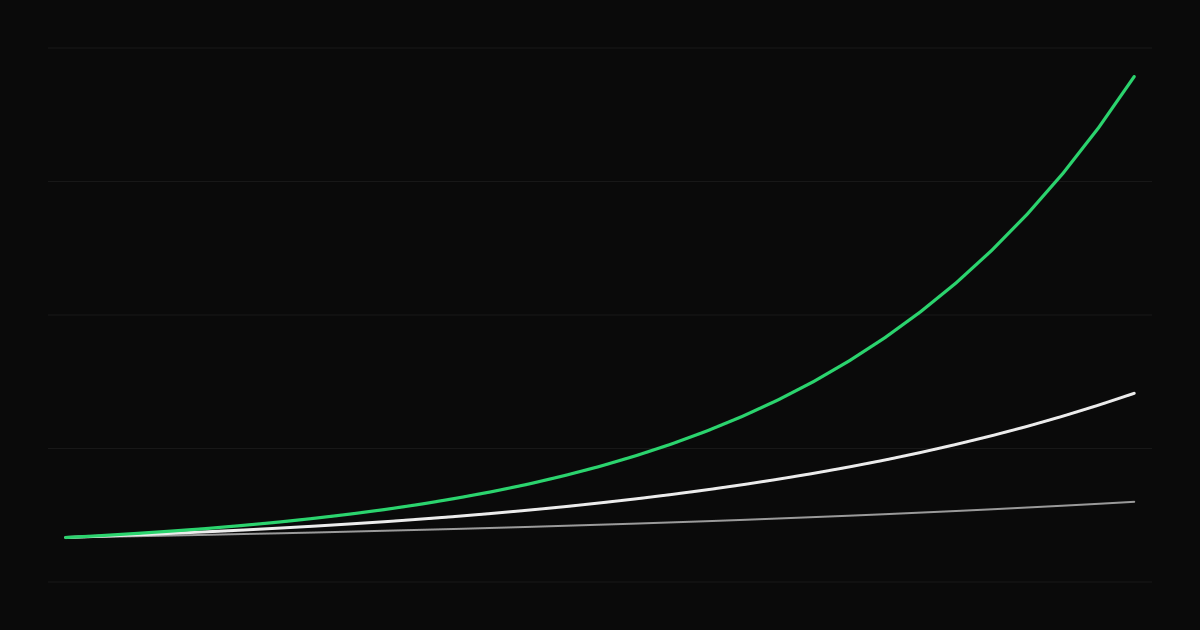
5%
$12,763
$16,289
$26,533
10%
$16,105
$25,937
$67,275
20%
$24,883
$61,917
$383,376
Consistency is what makes these numbers work. A strategy that makes 20% one year and loses 20% the next does not break even. It ends 4% down.
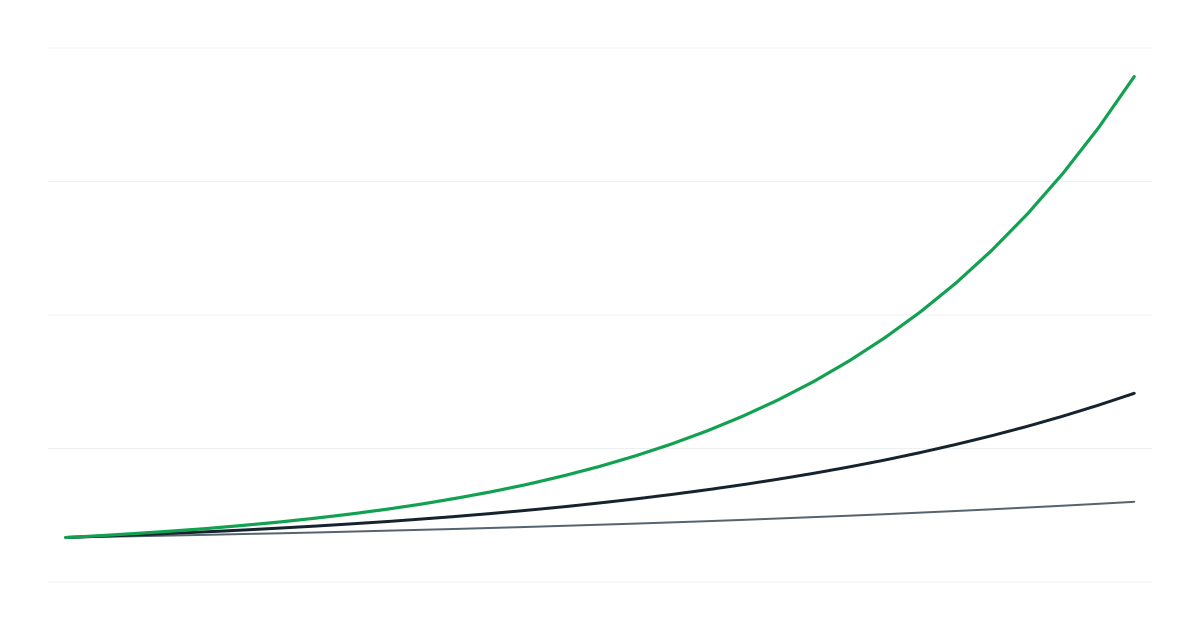
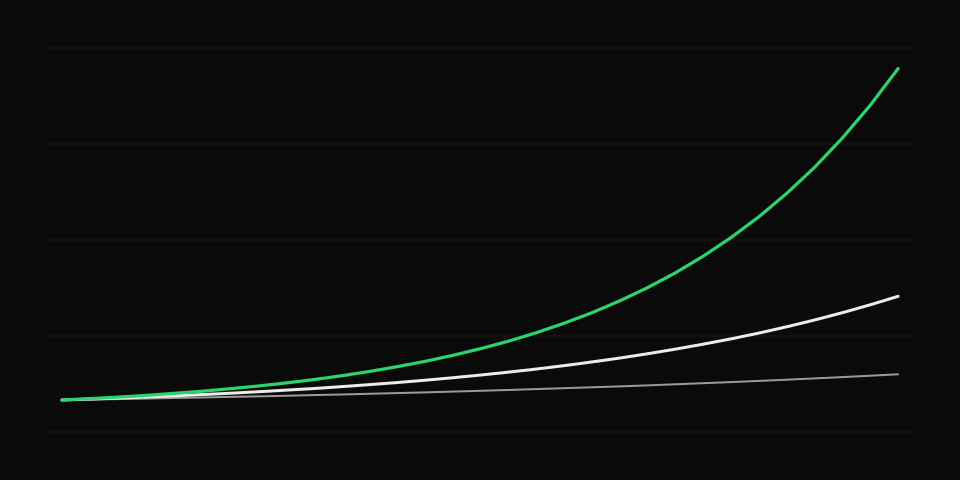
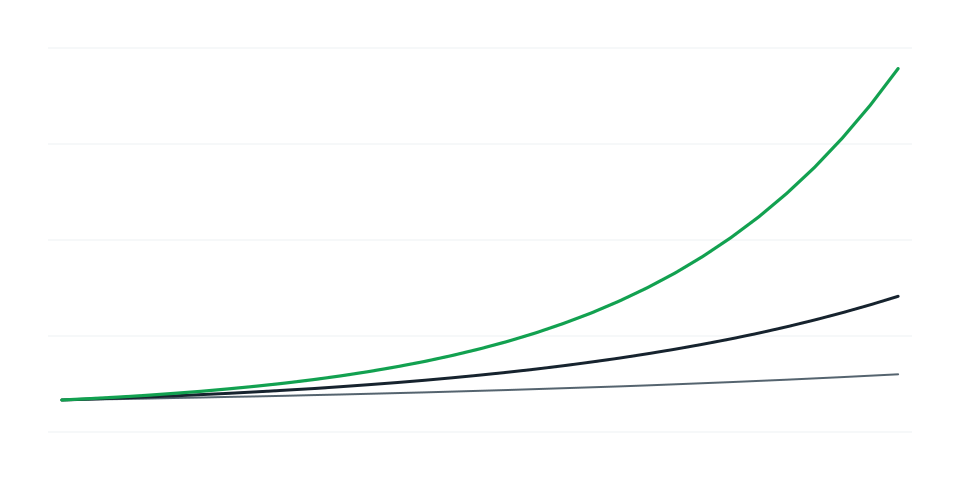
Growth at three different annual rates. Small differences in rate become large differences over time.
Drawdowns break compounding
Because returns multiply, losses have an outsized effect. A 50% loss requires a 100% gain to recover. See maximum drawdown. Two strategies with the same average return can end very differently if one has much deeper swings. This is sometimes called volatility drag.
That is why steady risk management does more for long-term growth than chasing high returns.
Monthly returns and unrealistic expectations
Compounding tempts traders to project: "1% a day becomes more than 1,000% a year" (1.01 to the power of 252 trading days is about 12.3). Mathematically true, practically unrealistic. Very few professional traders sustain returns anywhere near that. Chasing such targets leads to oversizing and, often, ruin. Set goals around process and risk, and let returns follow.
Withdrawals and deposits
If you withdraw profits regularly, your account compounds more slowly. If you add deposits, the balance grows faster than your trading returns. To measure your actual performance, separate the two. See cash flow in a trading account.
Try the numbers
Our free Investing Calculator shows how a starting balance grows with regular contributions and different return rates. In TradeThink, the cash flow page separates your trading results from deposits and withdrawals, so you can see your real compounded performance.
Why account balance growth is not the same as trading performance, how to separate deposits, withdrawals, fees, dividends and interest, and how to read a cash flow statement for your account.
How the US wash sale rule disallows losses when you rebuy within 30 days, how the disallowed loss carries into the new position, examples, and how active traders keep track.
How the IRS distinguishes investors, traders and dealers, what trader tax status means, how the section 475(f) mark-to-market election works and its deadlines.