Risk management
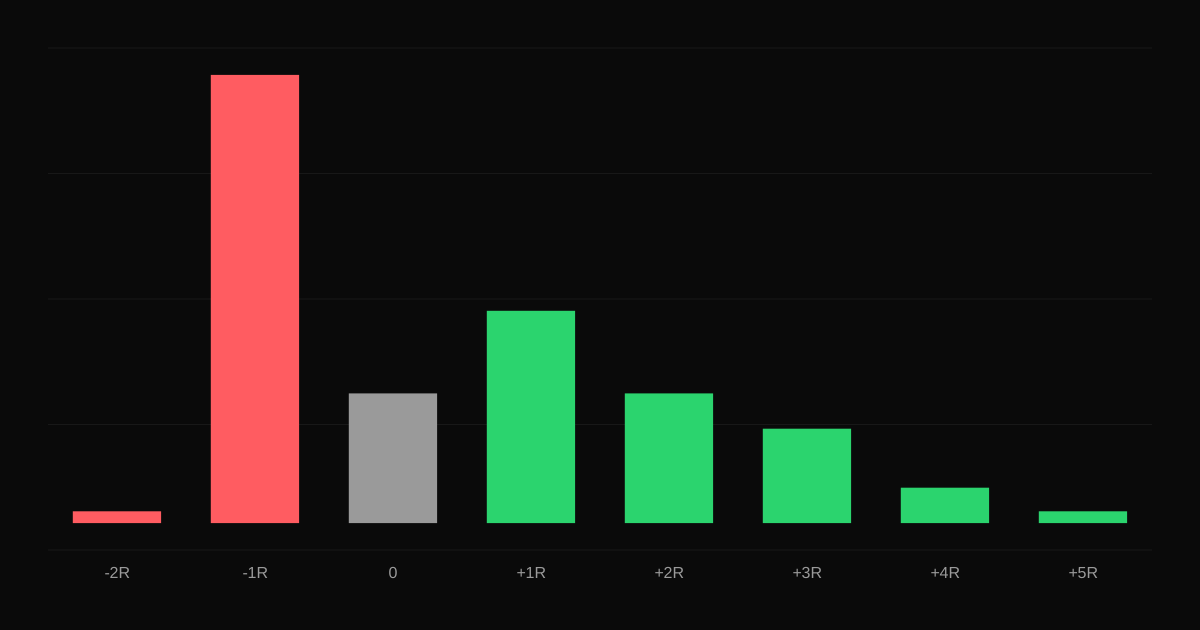
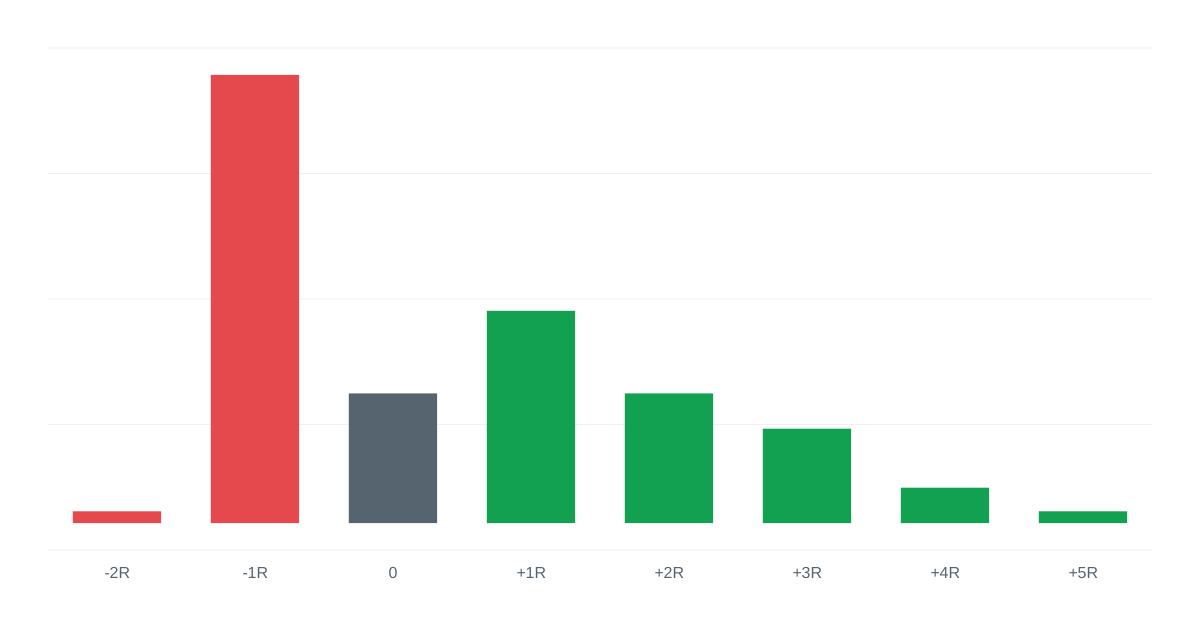
R-Multiples: The Best Way to Measure Your Trades
What R-multiples are, how to calculate them, and why measuring trades in units of risk makes your results comparable, honest and easier to improve.
What risk of ruin means in trading, the factors that drive it, and how risk per trade, win rate and payoff ratio change your chance of a catastrophic drawdown.
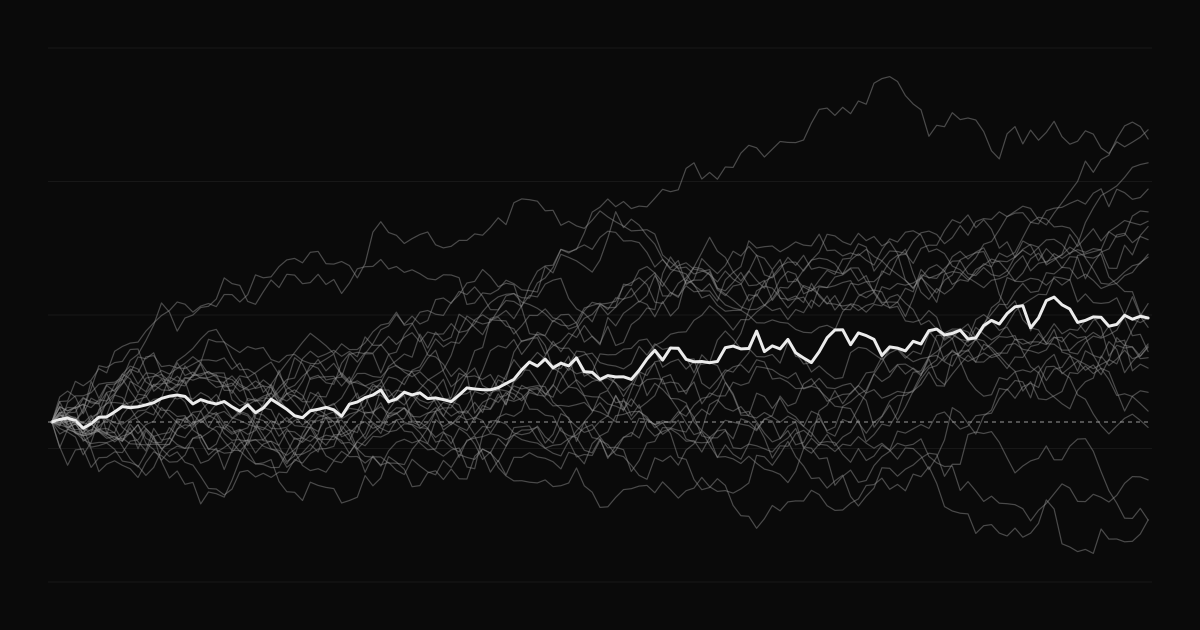
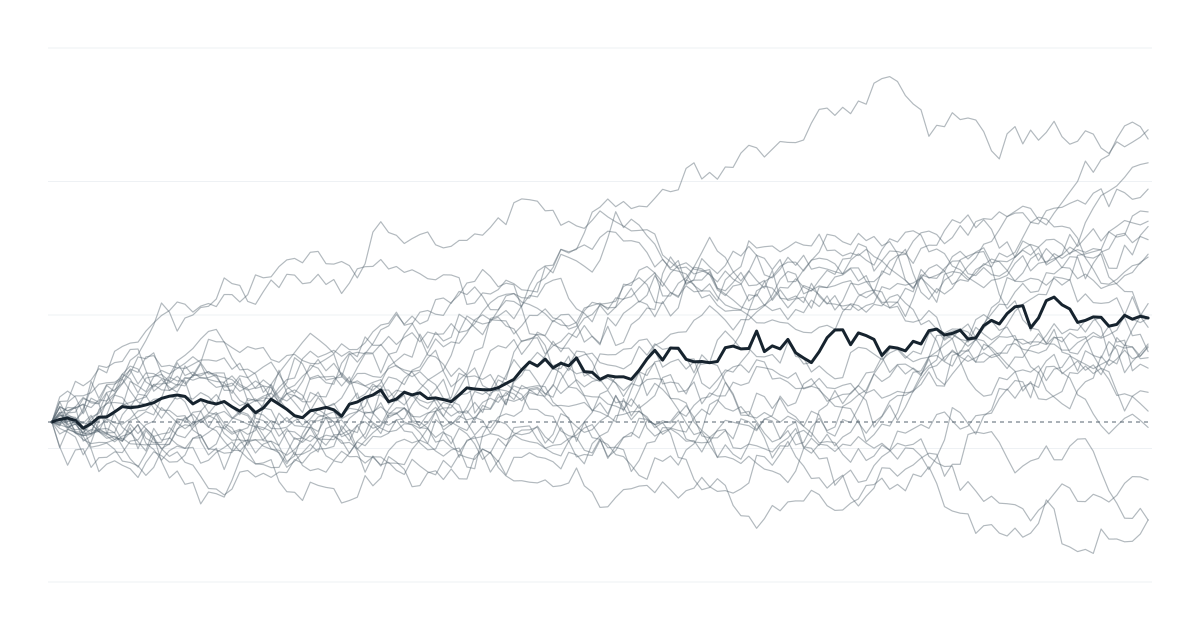
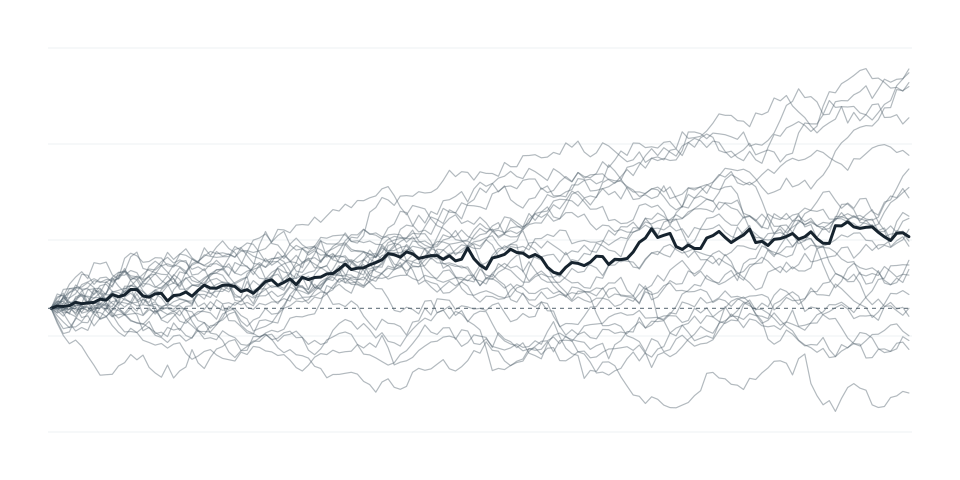
Risk of ruin is the probability that a strategy loses so much that you can no longer continue: the account hits zero, or a drawdown so deep you would stop trading. A strategy can have a positive edge and still have a meaningful risk of ruin if each bet is too large.
Three things matter most:
Of the three, risk per trade is the one you control directly, and it has the largest effect.
Imagine a coin flip that pays 1.2 to 1. It has a small positive edge. If you bet 50% of your account each flip, two losses in a row leave you with 25%, and a few more finish you, despite the edge. Bet 1% per flip and you would need a long, extremely unlikely streak to lose half the account.
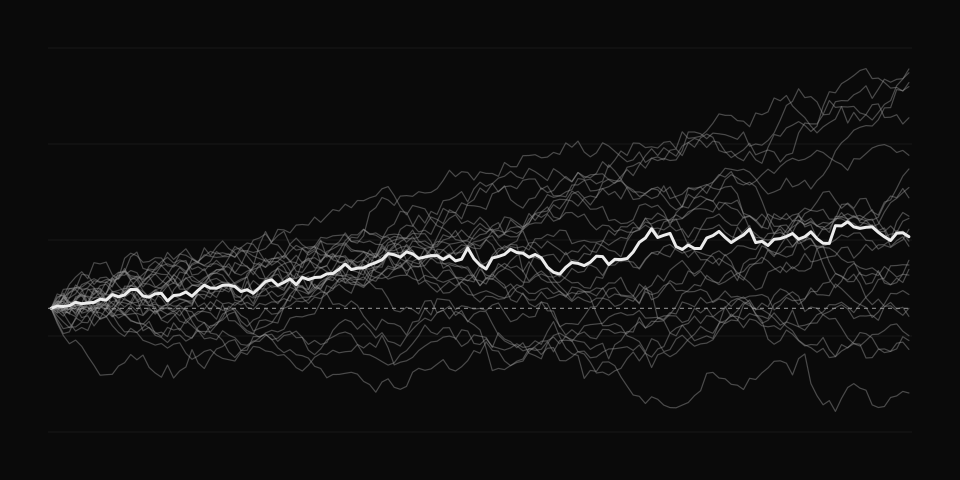
Closed-form formulas for risk of ruin exist for simple cases, but trading results are messy. A practical method is Monte Carlo simulation:
This uses your real distribution of wins and losses, including the occasional large loss.
For most traders, the practical ruin point is psychological. A 40% drawdown may not empty the account, but it often ends a trader's confidence and discipline. Define ruin as the drawdown you could not live with, and size so that it is very unlikely.
The free Kelly's Simulator runs simulations of many trades at different risk levels so you can see how often an account falls below a threshold. TradeThink's statistics give you the inputs: your win rate, payoff ratio and R distribution.
What R-multiples are, how to calculate them, and why measuring trades in units of risk makes your results comparable, honest and easier to improve.
How correlated positions multiply your risk, how to spot hidden correlation across stocks, sectors, currencies and crypto, and how to size around it.
How leverage and margin work in stocks, futures, forex and CFDs, how margin calls happen, and how to think about leverage in terms of risk rather than buying power.