Risk management
Daily Loss Limit: The One Rule That Protects You From Your Worst Days
How to set a daily loss limit for day trading, why it works, how big it should be, and how to make sure you actually stop when you hit it.
How the Kelly criterion calculates the bet size that maximizes long-term growth, how to apply it to trading, and why most traders use half Kelly or less.
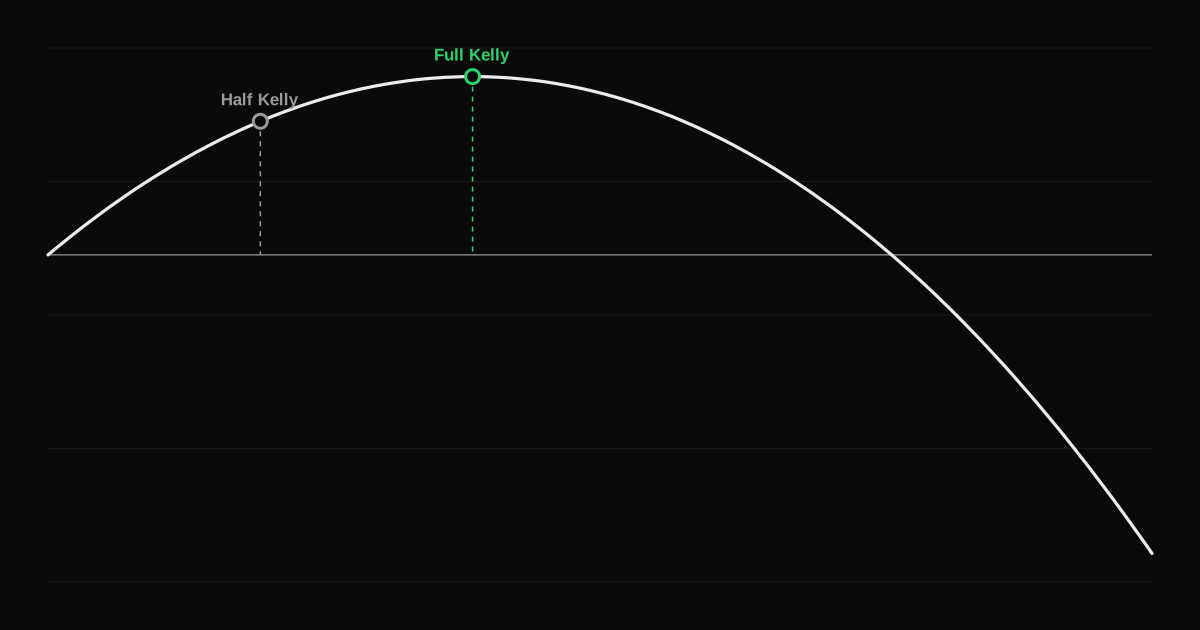
The Kelly criterion, published by John Kelly in 1956, gives the fraction of your capital to risk on each bet to maximize the long-term growth rate of your wealth. Bet less and you grow more slowly than you could. Bet more and you grow more slowly too, and eventually risk ruin.
For a bet that wins with probability p and pays b times your stake when it wins (losing the stake otherwise):
f* = p − (1 − p) ÷ b
Example: a strategy wins 55% of the time, and its average win equals its average loss (b = 1).
f = 0.55 − 0.45 ÷ 1 = 0.10*, or 10% of capital at risk per trade.
With a 45% win rate and an average win twice the average loss (b = 2): f = 0.45 − 0.55 ÷ 2 = 0.175*, or 17.5%.
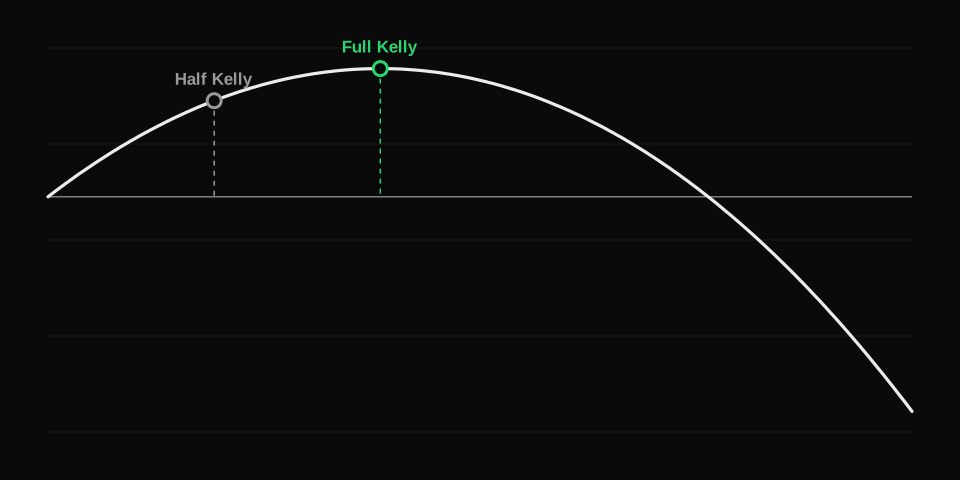
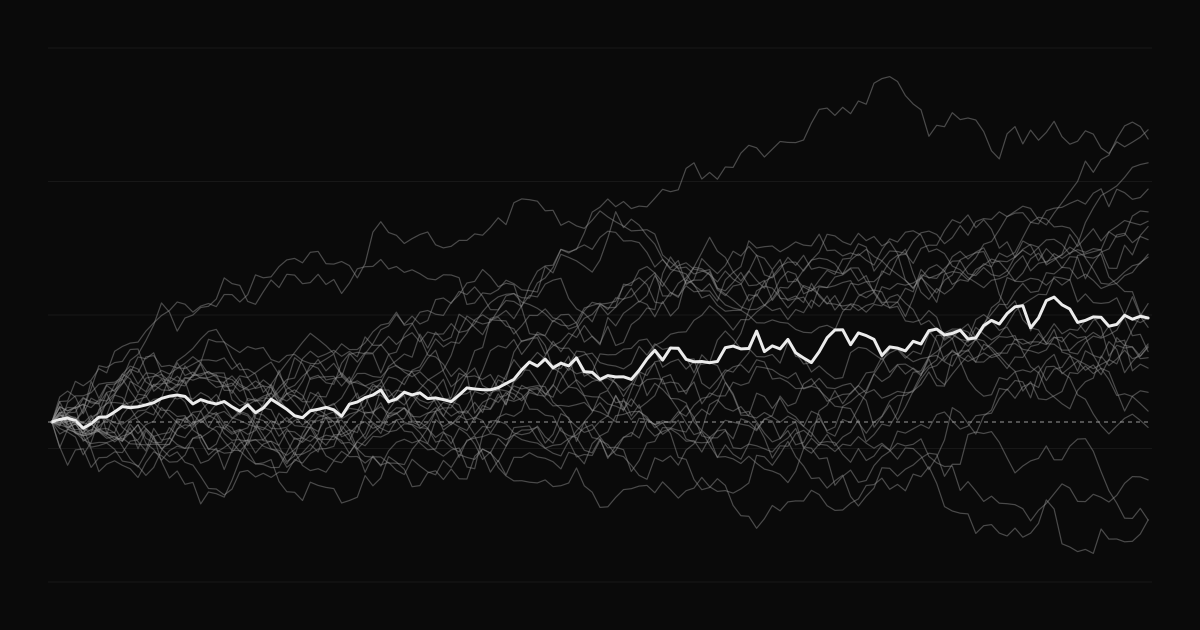
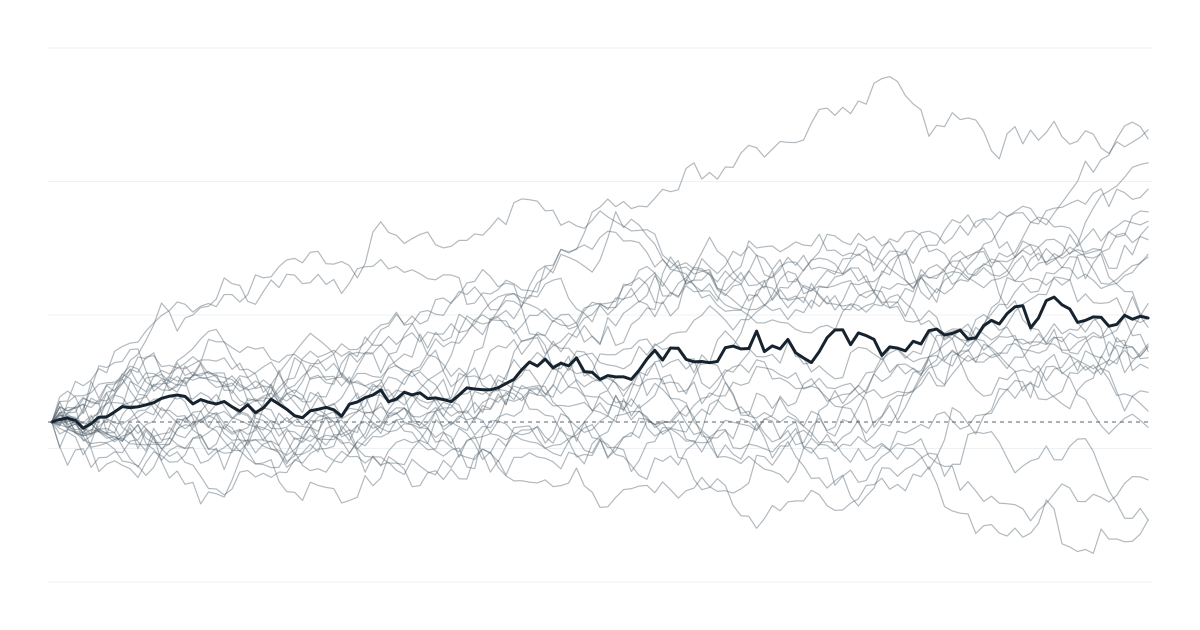
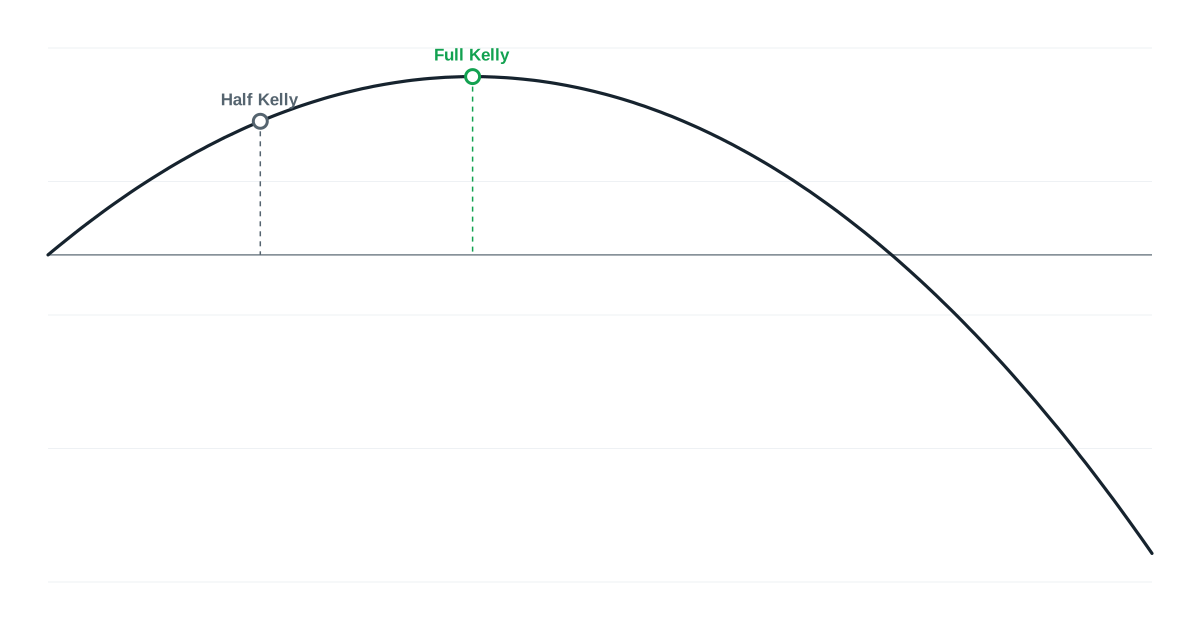
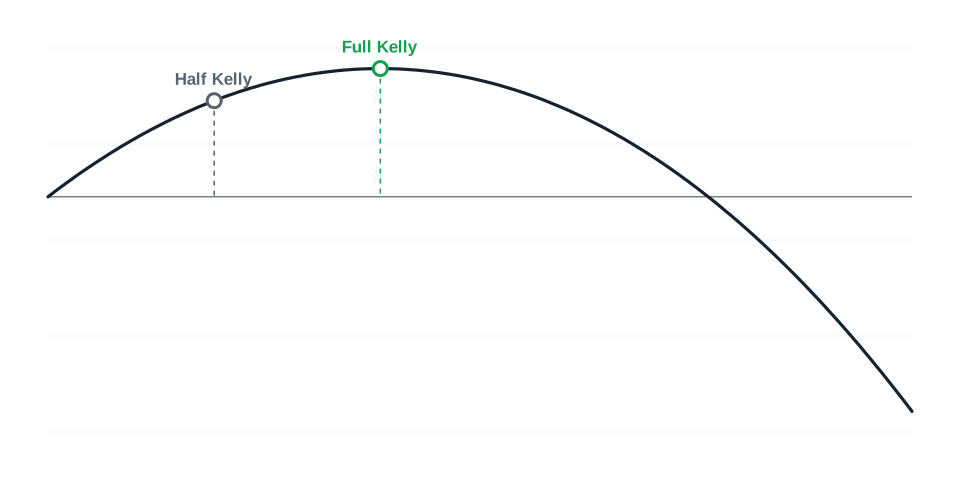
Full Kelly maximizes long-term growth, but the ride is brutal:
Notice the shape of the curve: it is flat near the top. Half Kelly gets about three quarters of the growth rate with much smaller drawdowns. That trade-off is why many practitioners use half Kelly or less.
The Kelly fractions above, 10% and 17.5%, are far larger than the 0.5% to 2% risk per trade most traders use. In practice, many traders treat Kelly as an upper limit and a check: if your risk per trade is above your Kelly fraction, you are risking too much for your edge. See the 1% rule.
Use your own trade history, not hopes. You need:
Be conservative. If your history is short, shrink your estimate of the edge before calculating.
Our free Kelly's Simulator shows how full Kelly, half Kelly and other fractions play out over many simulated trades, including the drawdowns. TradeThink also calculates the Kelly fraction from your real results on the statistics page. Related: risk of ruin.
How to set a daily loss limit for day trading, why it works, how big it should be, and how to make sure you actually stop when you hit it.
How to use the average true range (ATR) to set stop losses and position sizes that adapt to volatility, with formulas, multipliers and examples.
What risk of ruin means in trading, the factors that drive it, and how risk per trade, win rate and payoff ratio change your chance of a catastrophic drawdown.