Backtesting vs Journaling: Why You Need Both to Prove Your Edge
What backtesting tells you, what it cannot, why live trading results differ, and how a trading journal closes the gap between a strategy on paper and in practice.
By the TradeThink team··3 min read
A backtest shows how a set of rules would have performed on past data. A journal shows how you actually perform when you trade those rules live. Both answer the question "do I have an edge?", from opposite directions, and the gap between them is often where the most useful lessons are.
What backtesting is good for
Testing an idea quickly across many trades and market conditions.
Finding rough parameters, such as stop distance or holding period.
Rejecting bad ideas before risking money.
Estimating drawdowns and losing streaks to expect.
What backtesting misses
Execution. Fills, slippage and spreads in a backtest are assumptions. Real fills are often worse, especially on stops and in fast markets.
You. A backtest takes every signal without hesitation. A person skips some, takes some early and exits others out of fear.
Overfitting. With enough parameter tweaking, any strategy looks great on past data. That performance rarely carries forward.
Regime change. Markets change. A strategy that thrived in one period may not in the next.
Look-ahead bias: accidentally using information that was not available at the time.
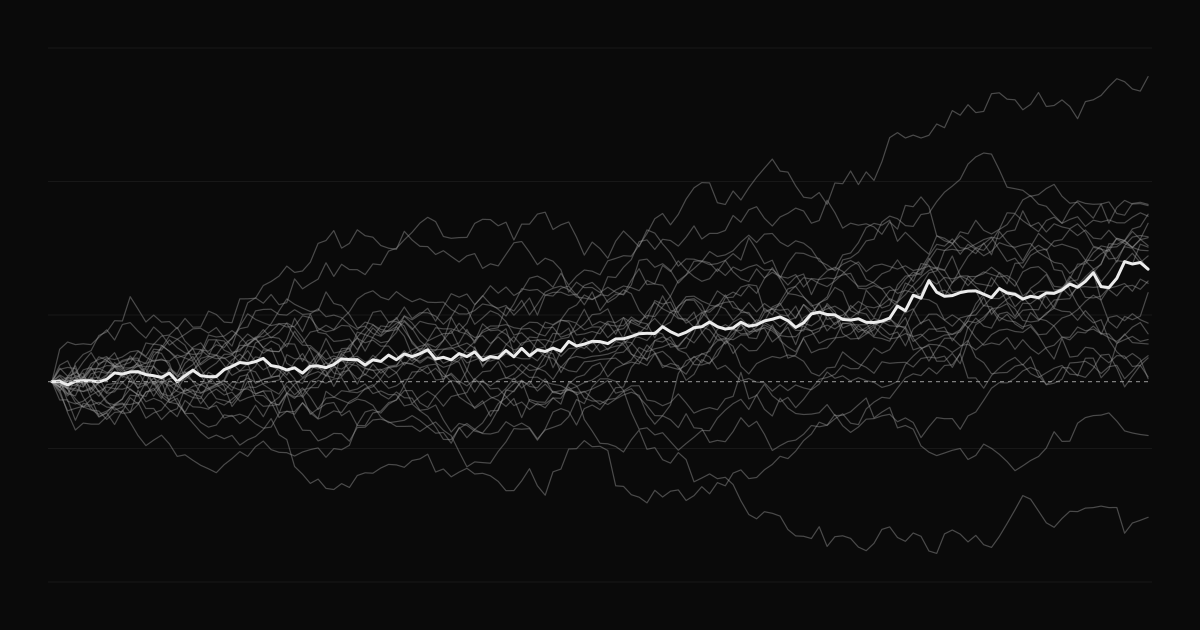
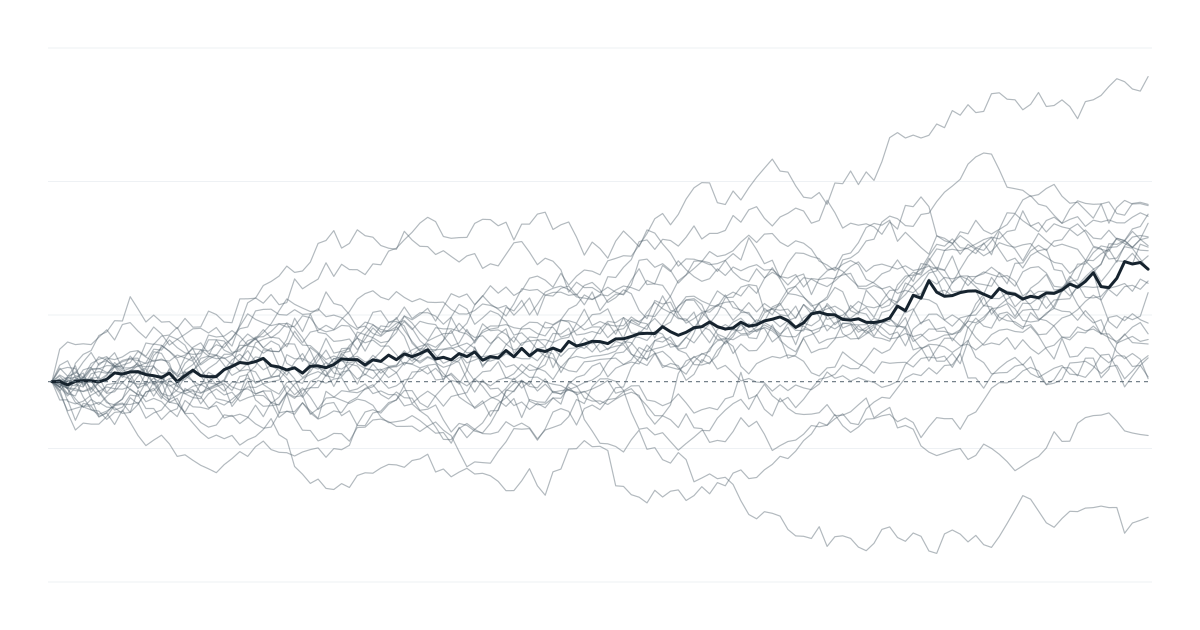
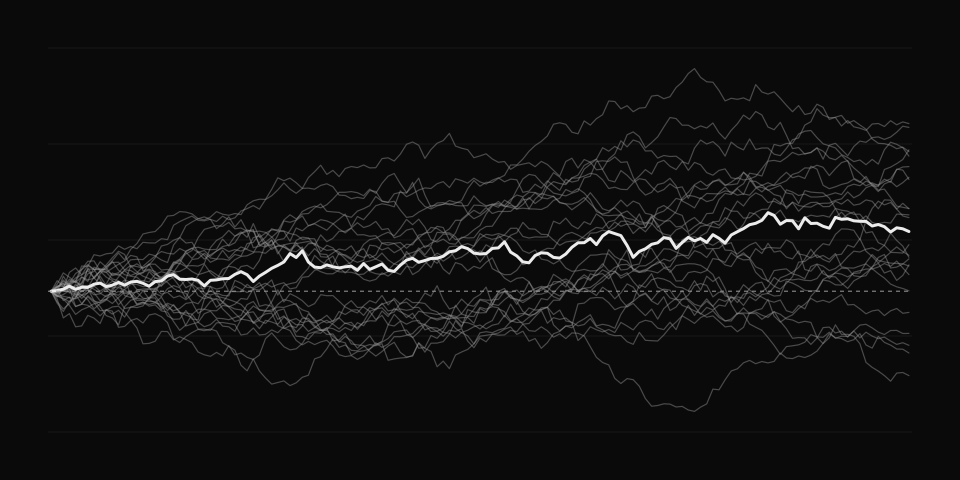
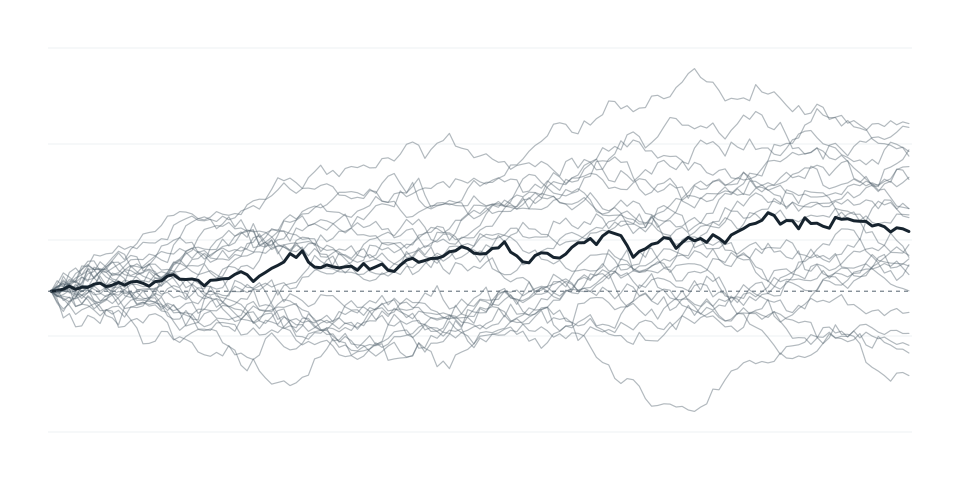
The same rules can produce many paths. A backtest shows one of them.
What journaling adds
Your journal records the strategy as you actually trade it:
Real costs and fills.
Signals you skipped or took incorrectly, if you tag them.
Your behavior: emotions, mistakes and discipline.
Results in current market conditions.
Comparing the two
When live results lag the backtest, ask:
Are costs and slippage higher than the backtest assumed? See fees and commissions.
Am I taking all the signals, or only the ones I like?
Is my sample large enough to judge? See sample size.
A practical workflow
Backtest the idea roughly.
Paper trade or trade very small, journaling every trade with a setup tag.
After a meaningful number of trades, compare live expectancy and win rate with the backtest.
Scale up only when the live numbers support it.
In TradeThink
Tag each live trade with its setup and compare results by setup in the reports. The statistics show win rate, expectancy and drawdown for any filtered group, so your live numbers sit right next to what your backtest promised. Related: building a trading plan.
How traders use simple and exponential moving averages for trend direction, crossover signals, pullback entries and trailing stops, and the trade-offs of each approach.