The Covered Call: How It Works, Payoff, Risks and When to Use It
How a covered call works, its payoff at expiration, a worked example, the risks of assignment and capped upside, and how to track covered calls in a journal.
By the TradeThink team··3 min read
A covered call combines owning 100 shares of a stock with selling one call option against them. You collect the option premium as income, and in exchange you agree to sell your shares at the strike price if the stock is above it at expiration.
The payoff
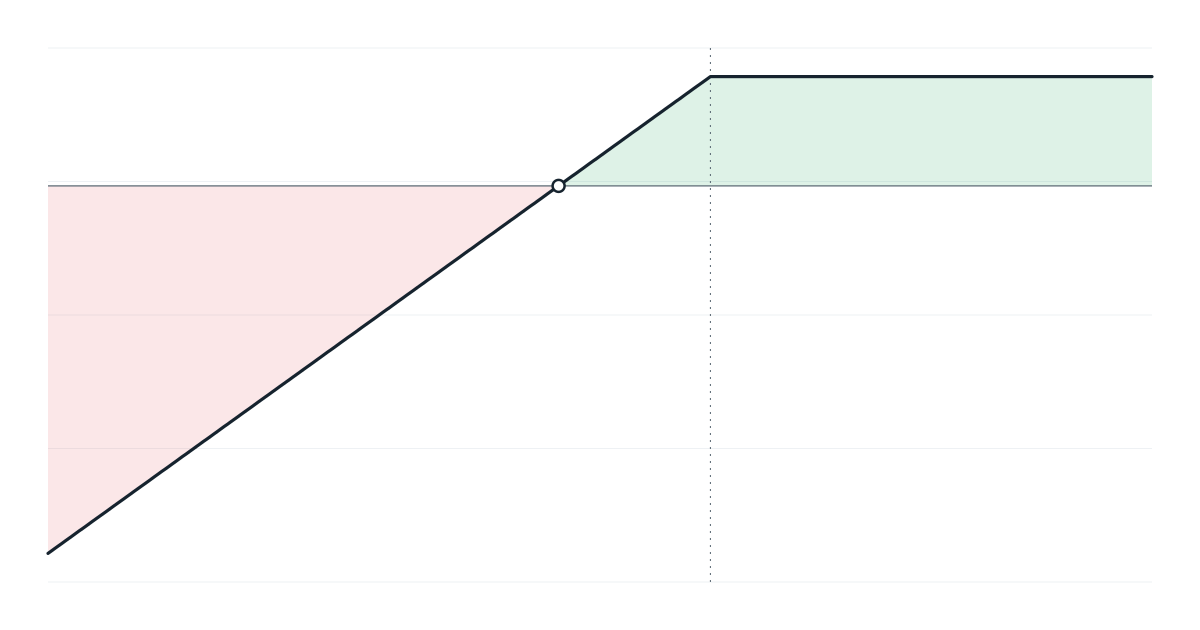
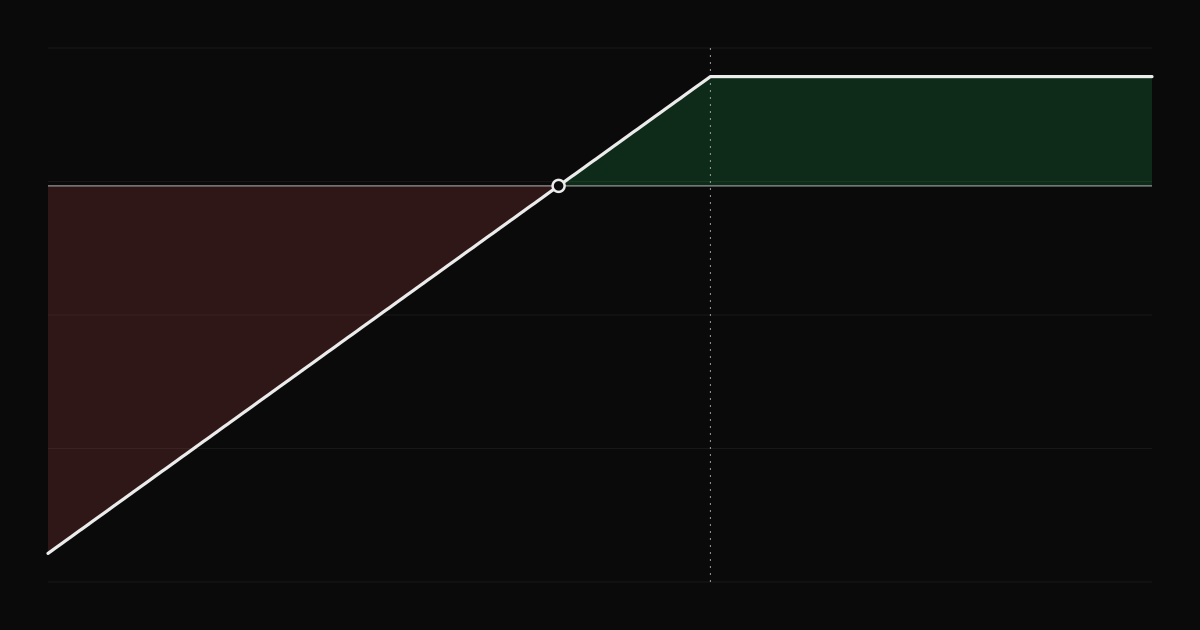
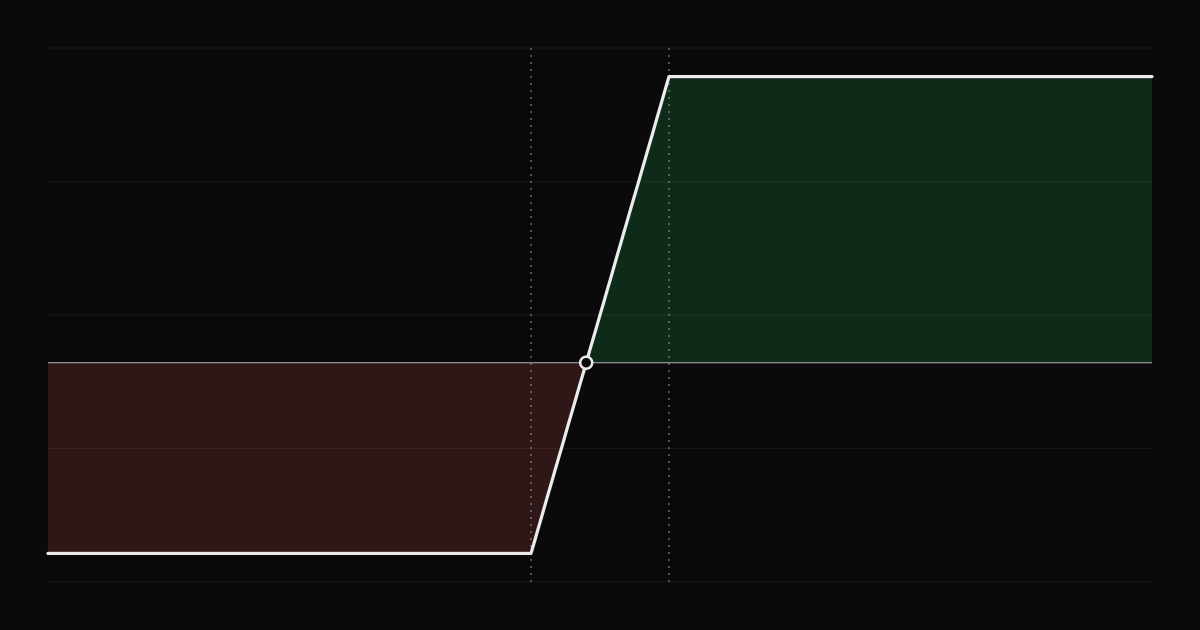
Covered call payoff at expiration: gains are capped at the strike, while downside remains, cushioned by the premium.
At expiration:
Stock below the strike: the call expires worthless. You keep the shares and the premium.
Stock above the strike: the shares are called away at the strike. You keep the premium plus any gain up to the strike.
Worked example
You own 100 shares bought at $100. You sell one 30-day call with a $105 strike for $2.00 ($200).
Maximum profit: ($105 − $100) + $2 = $7 per share, $700, if the stock is at or above $105 at expiration.
Break-even: $100 − $2 = $98.
Downside: below $98, you lose money like a shareholder, offset only by the $200 premium.
Why traders use it
Income from shares you already hold.
A small cushion against declines, equal to the premium.
A planned exit: selling at the strike can be a target you were happy with anyway.
Risks and trade-offs
Capped upside. If the stock jumps 20%, you only get the gain up to the strike.
Full downside below the break-even. The premium is a small cushion, not protection. For protection, see protective puts and collars.
Early assignment. American-style calls can be exercised early, most often just before an ex-dividend date when the remaining time value is less than the dividend. See assignment and expiration.
Taxes. Selling calls can affect holding periods and tax treatment in some jurisdictions. See capital gains basics.
Choosing the strike and expiration
Higher strikes leave more upside but pay less premium.
Shorter expirations decay faster but need more frequent management. See theta decay.
Many traders sell calls with a delta around 0.20 to 0.35, a balance between premium and upside.
Tracking covered calls
In a journal, a covered call is a stock position plus a series of short calls. Each call should be tracked as its own trade, while the total return includes both legs. In TradeThink, the risk profile shows the combined payoff, and the open positions page shows each leg with live greeks. The official Characteristics and Risks of Standardized Options is required reading before trading options.