Risk management
Maximum Drawdown: Why Losses Are Harder to Recover Than You Think
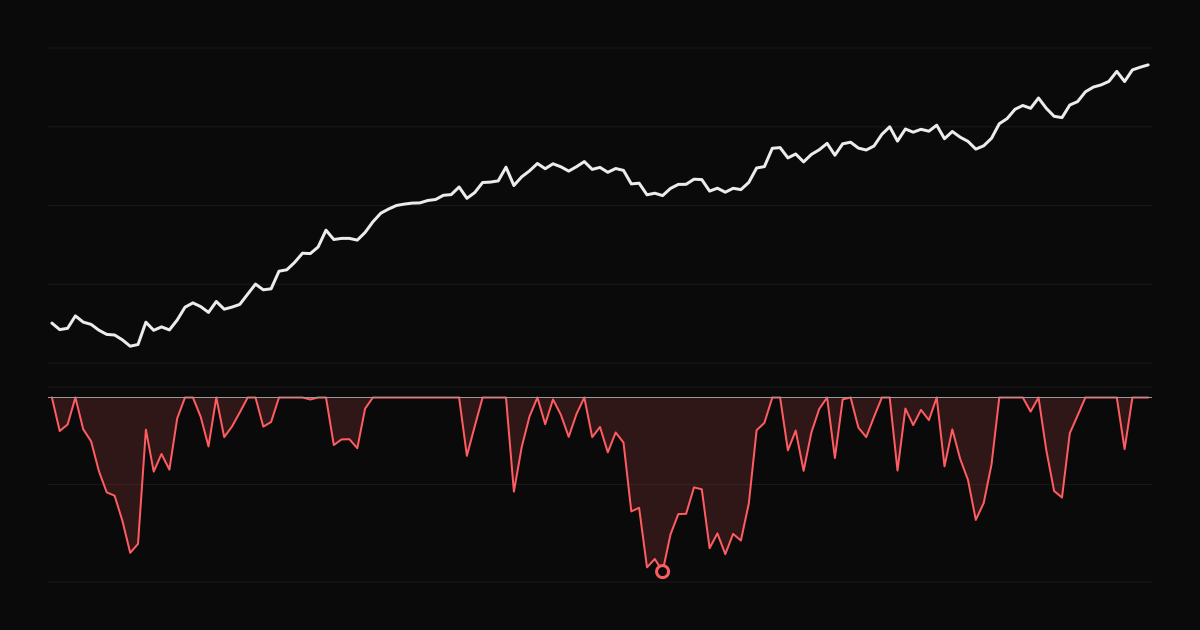
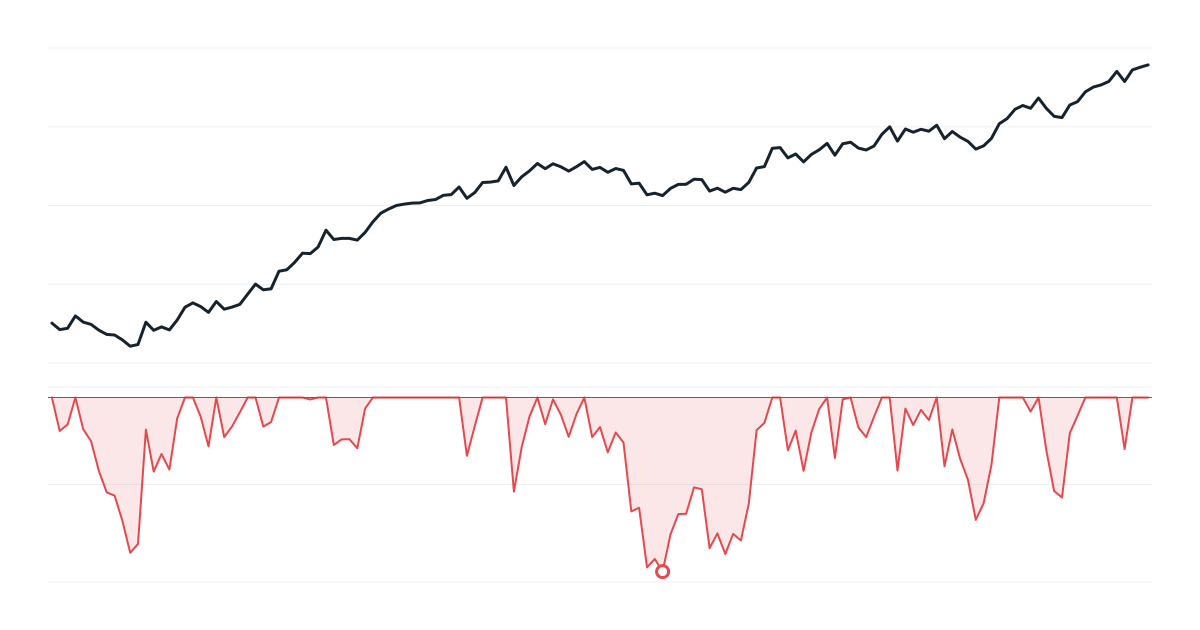
What maximum drawdown is, how to calculate it, the gain needed to recover from each drawdown, and how to keep drawdowns small enough to survive.
What the risk-reward ratio means, the break-even win rate for each ratio, and why a high ratio alone does not make a strategy profitable.
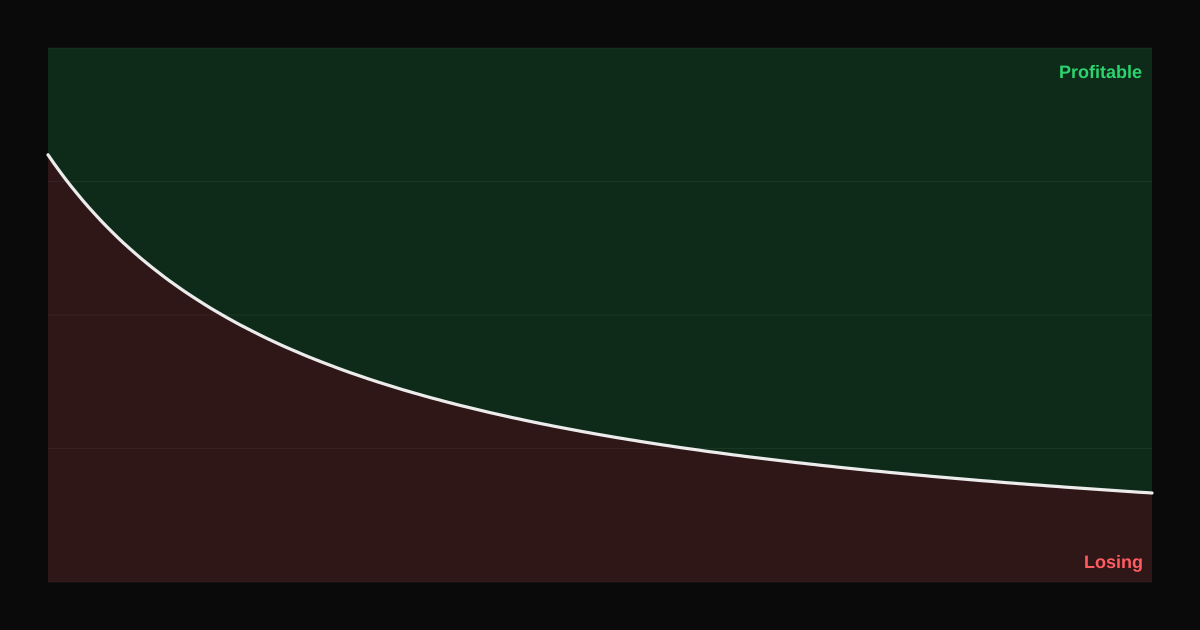
The risk-reward ratio compares how much you stand to lose on a trade with how much you aim to gain. Risk $100 to make $200 and your reward-to-risk is 2:1. It is a useful tool, but only when you look at it together with your win rate.
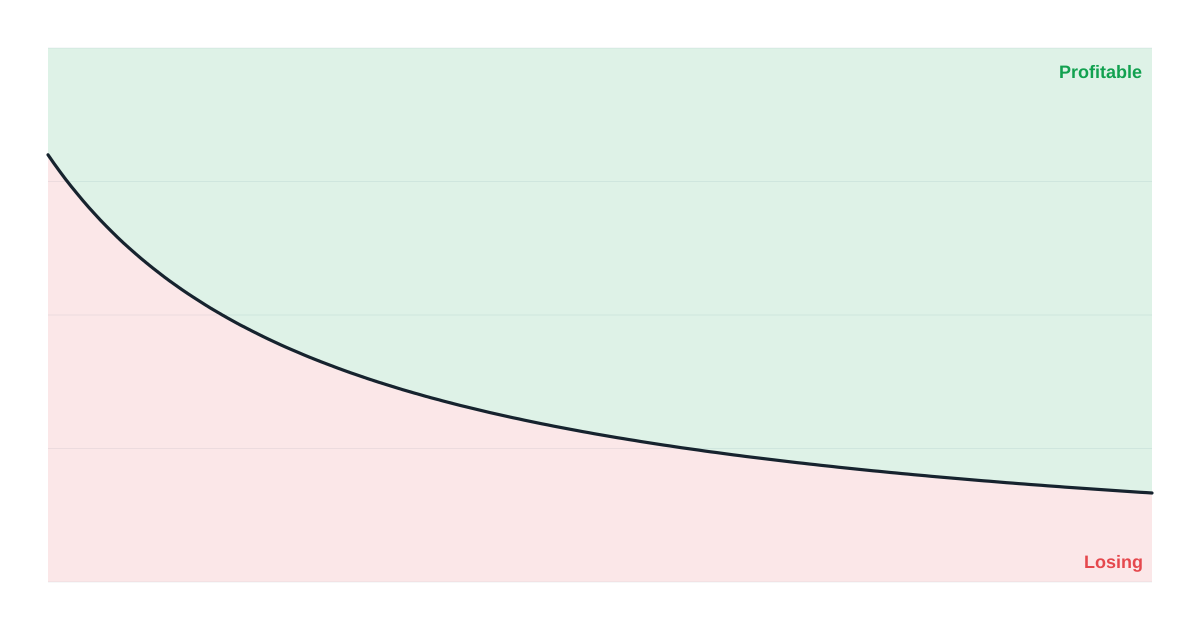
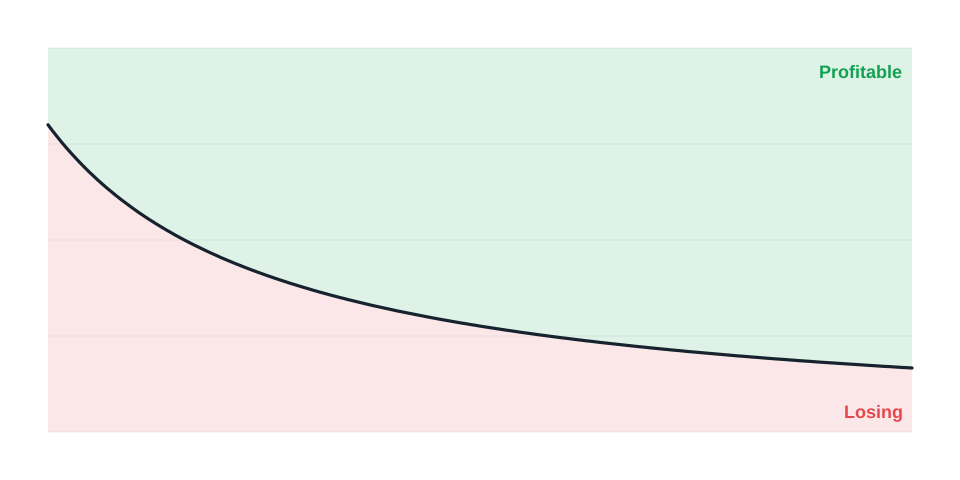
For any reward-to-risk ratio R, the win rate you need to break even (before fees) is:
Break-even win rate = 1 ÷ (1 + R)
| Reward : risk | Break-even win rate |
|---|---|
| 0.5 : 1 | 66.7% |
| 1 : 1 | 50.0% |
| 1.5 : 1 | 40.0% |
| 2 : 1 | 33.3% |
| 3 : 1 | 25.0% |
| 5 : 1 | 16.7% |
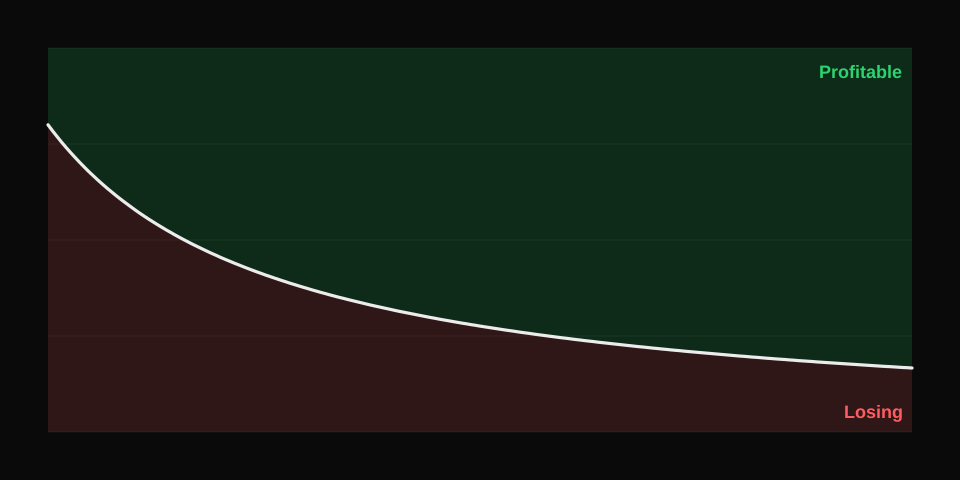
It is tempting to only take 3:1 trades. The catch is that targets further away are hit less often. A 3:1 trade that wins 20% of the time loses money. A 1:1 trade that wins 60% of the time makes money. What counts is the combination, which is captured by expectancy:
Expectancy = (Win rate × Average win) − (Loss rate × Average loss)
The ratio you plan is not always the ratio you get. Your actual ratio is your average win divided by your average loss. Many traders plan 2:1 trades but realize 0.8:1 because they cut winners early and let losers run. Your journal shows the real number. See average win vs average loss.
Neither is better. Pick a ratio that matches how your strategy behaves, then measure it.
Expressing every result as a multiple of the initial risk, called an R-multiple, makes the ratio and the win rate easy to compare across trades of different sizes. A +2R win and a −1R loss mean the same thing whether you traded 100 shares or 1,000.
The statistics show your win rate, average win, average loss, their ratio, profit factor and expectancy side by side, so you can see where you are on the chart above. Use the free Position Calculator to plan the ratio before you enter.
What maximum drawdown is, how to calculate it, the gain needed to recover from each drawdown, and how to keep drawdowns small enough to survive.
How the Kelly criterion calculates the bet size that maximizes long-term growth, how to apply it to trading, and why most traders use half Kelly or less.
How to set a daily loss limit for day trading, why it works, how big it should be, and how to make sure you actually stop when you hit it.