Trading journal
How to Keep a Trading Journal That Actually Improves Your Trading
A practical guide to keeping a trading journal: what to record, when to write, how to review it each week and how to turn your notes into better rules.
How a P&L calendar heatmap helps you spot losing streaks, overtrading and patterns in your trading, and what to look for when you review it.
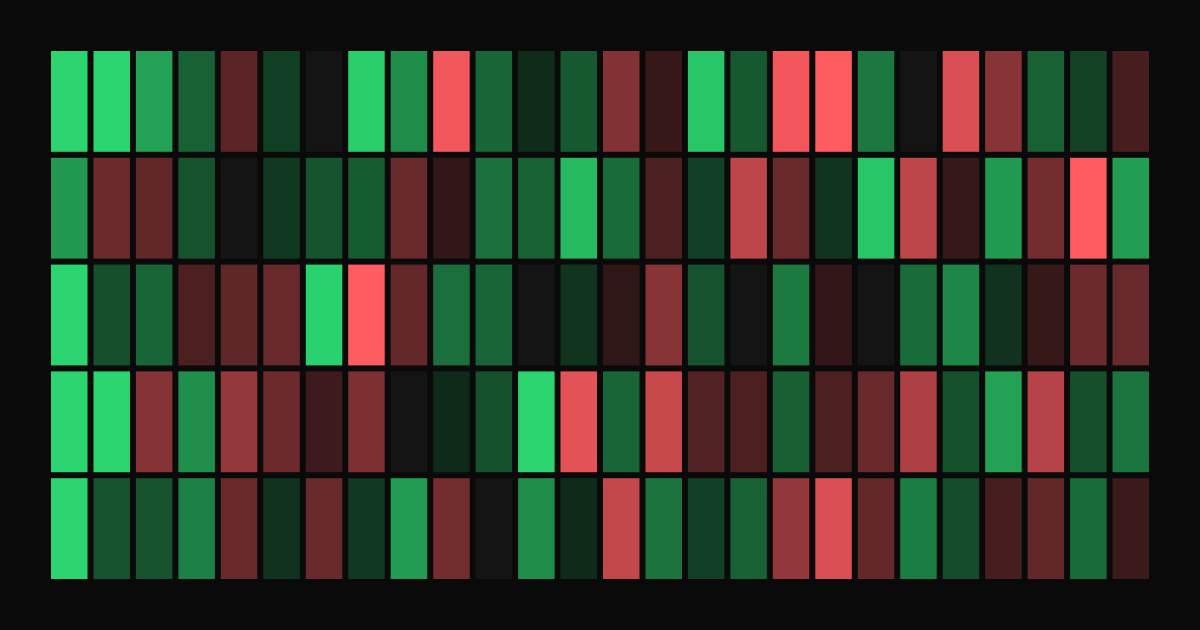
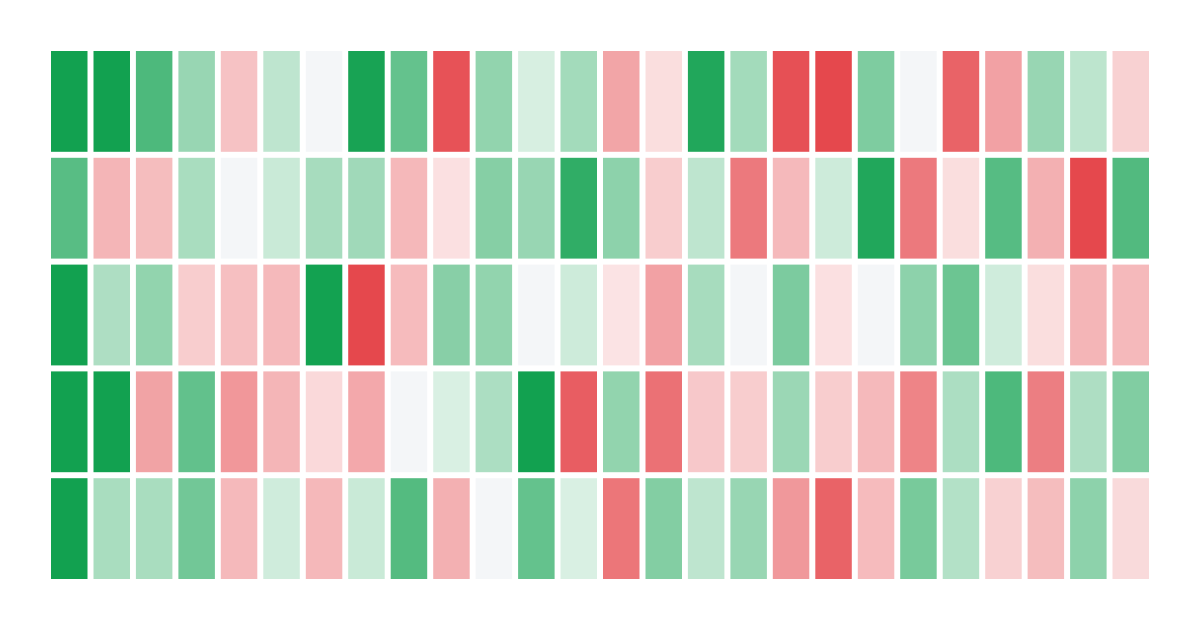
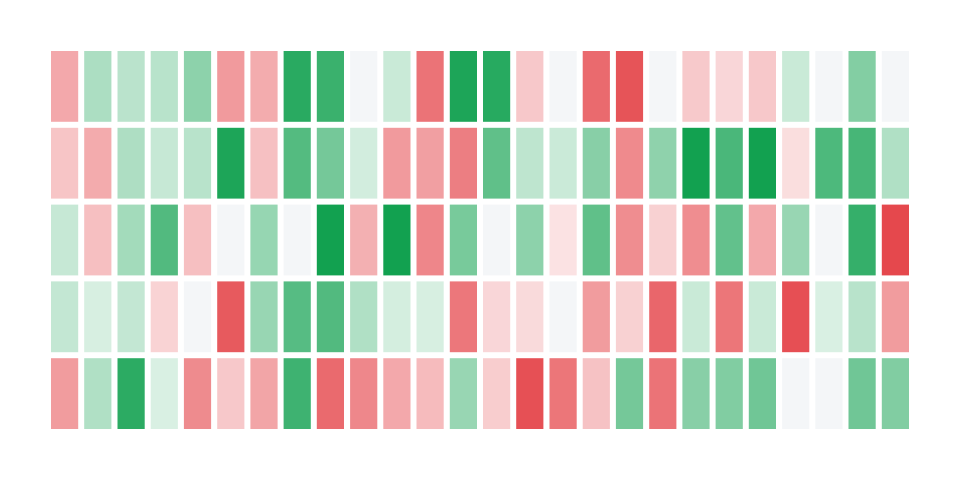
A table of trades shows details. A calendar shows rhythm. When each day is colored by its P&L, patterns that are invisible in a list become obvious: a string of red days after a big loss, a habit of giving back profits on Fridays, a month where you traded every single day.
Each day is a cell. Green for a profitable day, red for a losing day, the shade showing the size. Empty cells are days you did not trade. Many calendars also show the number of trades and a weekly total.
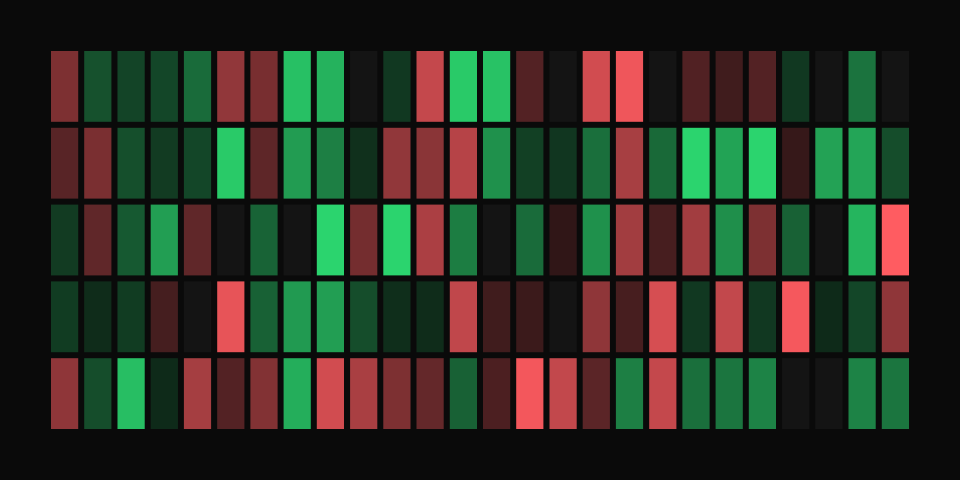
Clusters of red. Losing days in a row often have a common cause: a change in market conditions, a personal issue, or tilt after one bad day. Read your journal entries for the first day of the cluster.
Large red days. If one red day wipes out a week of green, you do not have a strategy problem. You have a daily loss limit problem.
What happens after a big green day. Many traders follow their best days with poor ones. See confidence after a big win.
Activity. Compare the number of trades on green and red days. If red days have far more trades, you are probably overtrading when things go badly.
Weekly rhythm. Weak Mondays or Fridays show up as a column of red. See day-of-week performance.
The calendar becomes much more useful when you can see your notes alongside it. Marking days that have journal entries, and seeing the mood or "plan followed" for each day, lets you connect the color of the day with what you wrote.
During your weekly review, look at the calendar first. It takes ten seconds and tells you where to dig: open the worst day, read your notes and look at the trades.
The calendar shows daily P&L, the number of trades and weekly totals, and highlights days with journal notes. Click a day to see its trades, then open the daily journal for that day to read or add notes. You can also add a calendar widget to your dashboard.
A practical guide to keeping a trading journal: what to record, when to write, how to review it each week and how to turn your notes into better rules.
The fields every trading journal should have, from entry and exit details to setup, mistakes, emotions and execution rating, with examples of each.
A free trading journal template for daily, per-trade and weekly entries, with the exact questions to answer and how to adapt it for stocks, options and futures.