Profit Factor Explained: What Is a Good Profit Factor?
How to calculate profit factor, what values are good for day traders and swing traders, its limitations, and how to use it alongside other metrics.
By the TradeThink team··3 min read
Profit factor is one of the simplest and most useful performance metrics. It answers one question: for every dollar you lost, how many did you make?
The formula
Profit factor = Gross profit ÷ Gross loss
Example: your winning trades made $18,000 in total and your losing trades lost $12,000. Profit factor = 18,000 ÷ 12,000 = 1.5.
Above 1: profitable.
Exactly 1: break-even.
Below 1: losing.
Use net figures after commissions and fees. Fees can turn a profit factor of 1.1 into 0.95.
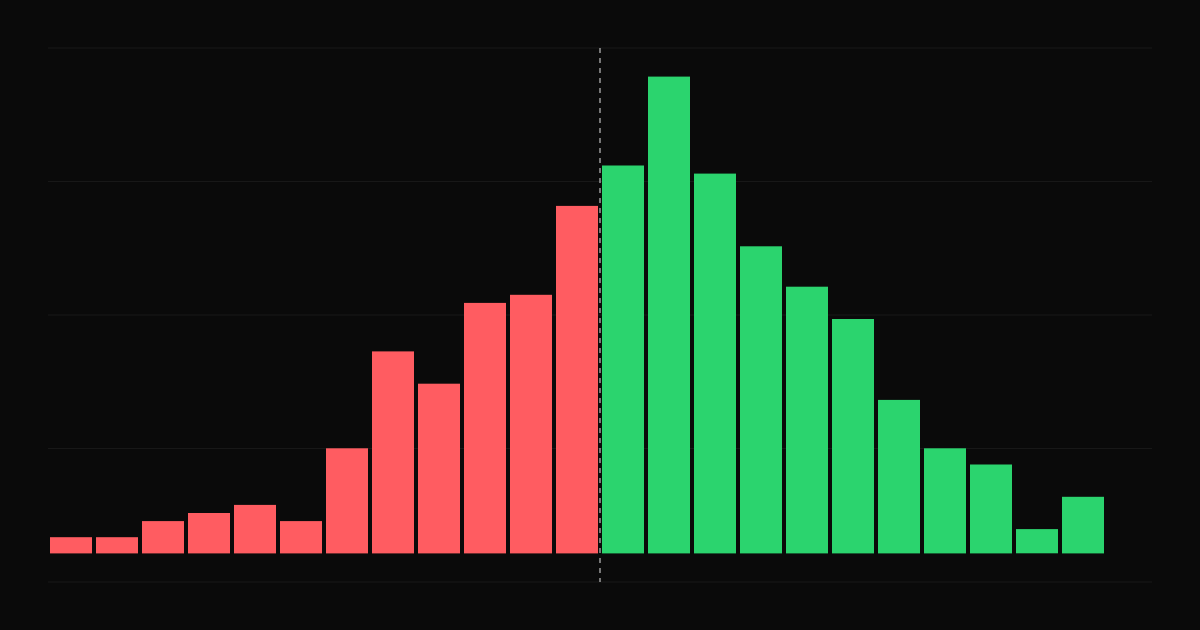
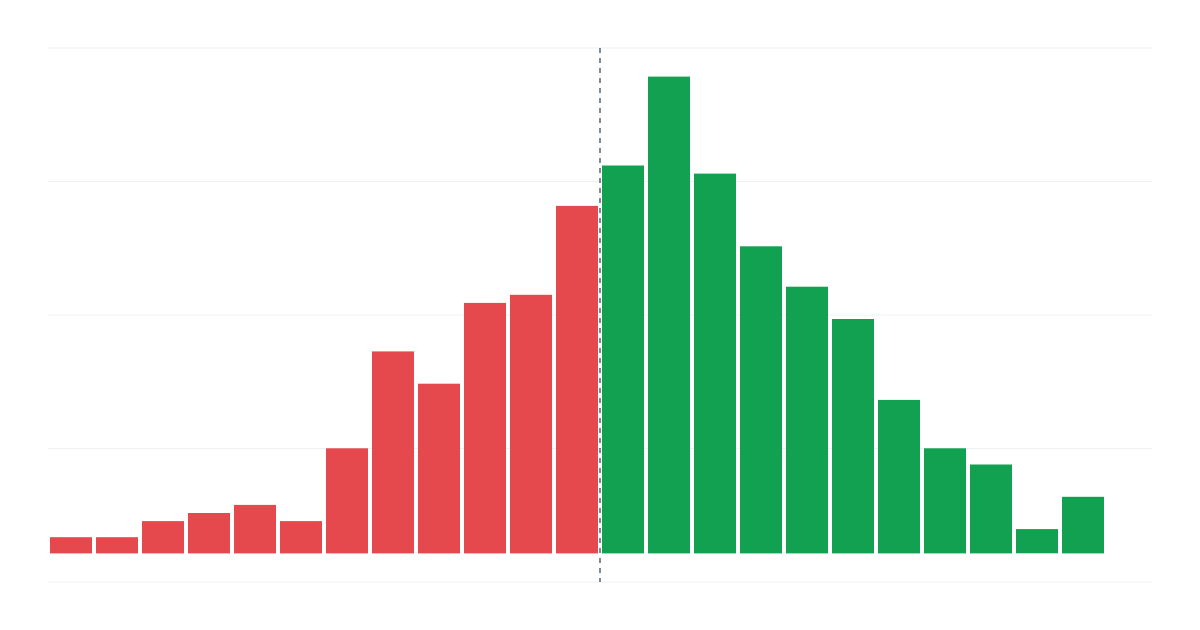
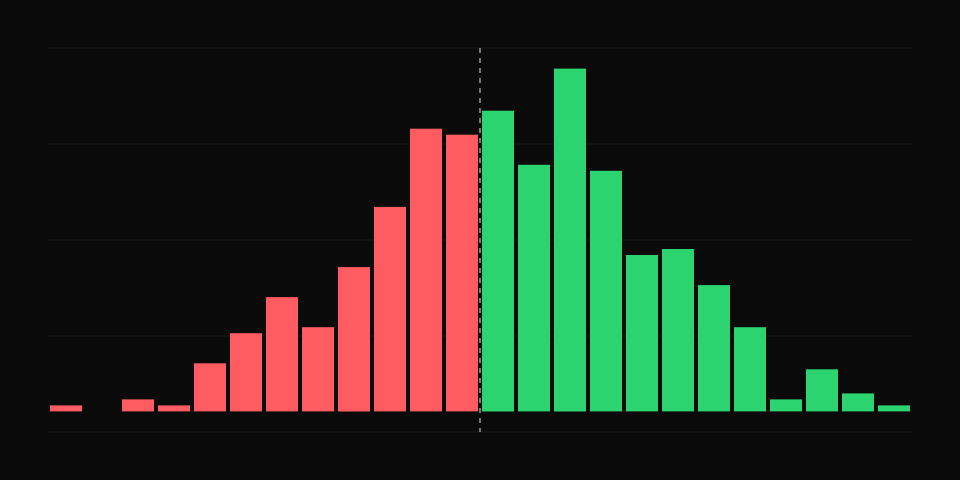
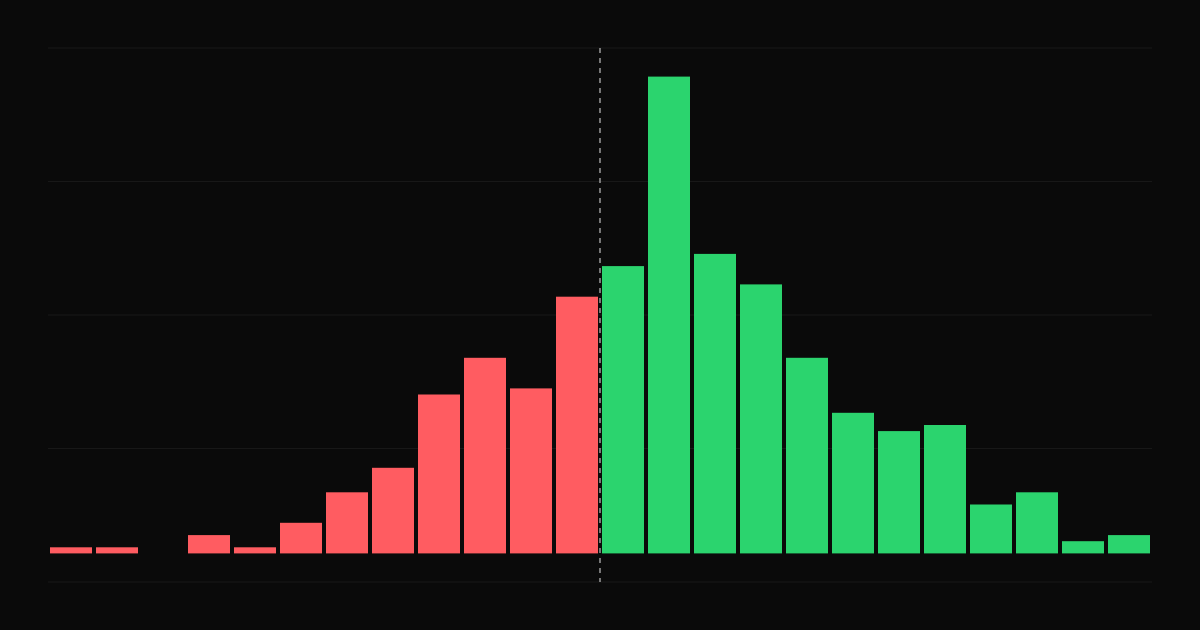
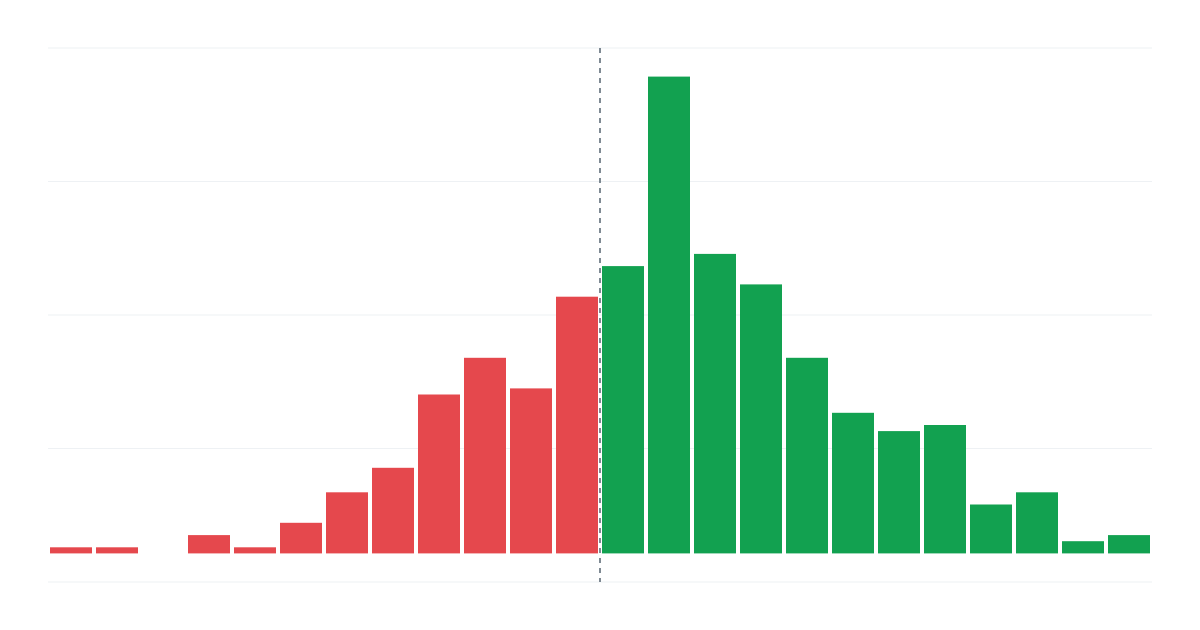
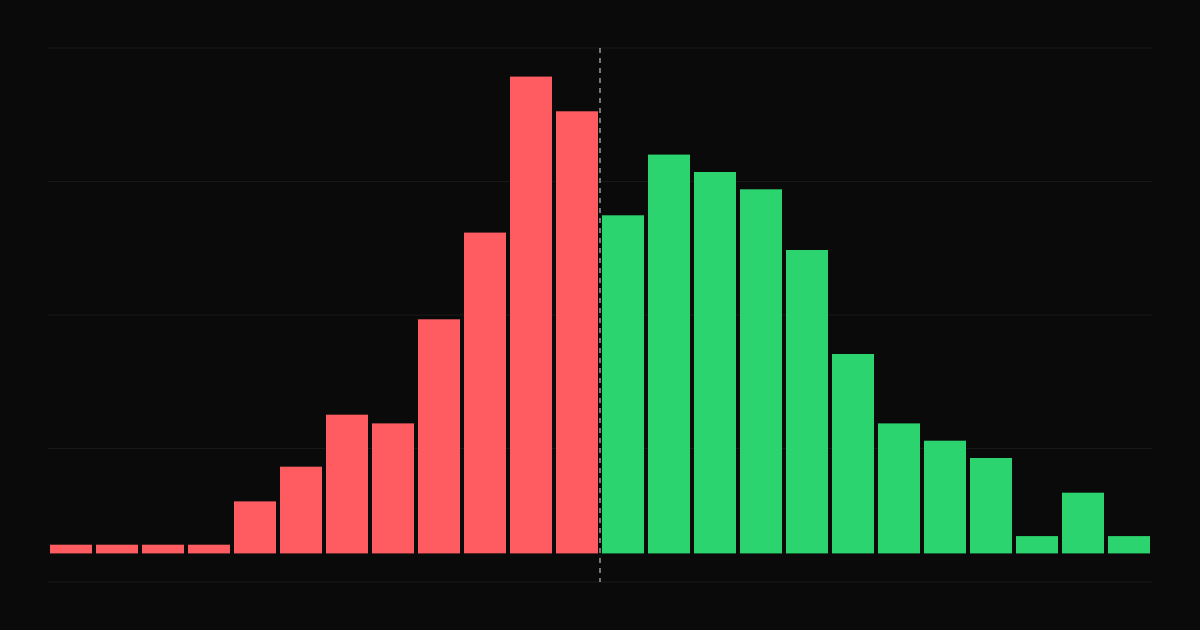
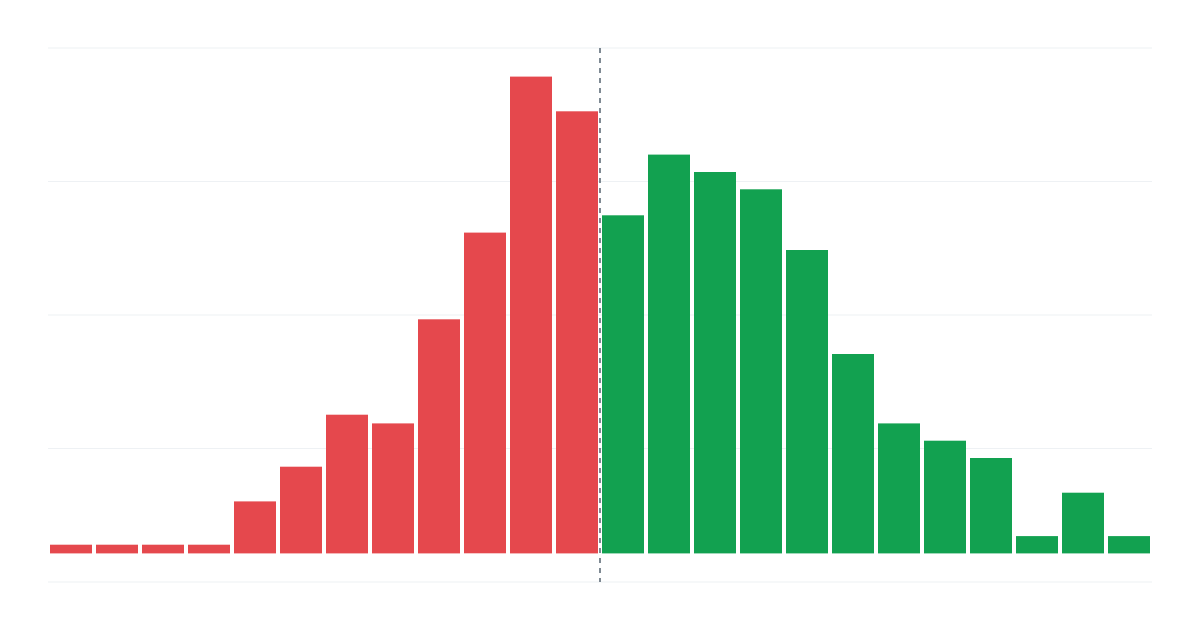
Profit factor is the total of the green bars divided by the total of the red bars.
What is a good profit factor?
There is no universal answer, but rough guides used by many traders, after costs:
Profit factor
Typical reading
Below 1.0
Losing strategy
1.0 to 1.2
Marginal; fragile to costs and changing conditions
1.2 to 1.5
Solid for active trading
1.5 to 2.0
Strong
Above 2.0
Excellent, or a small sample; check carefully
Very high profit factors over a small number of trades usually come down to a few big winners. Check whether the result holds without your best two or three trades.
Strengths
Easy to calculate and understand.
Independent of position size when calculated on R rather than dollars.
Profit factor is shown on the dashboard and statistics pages, and you can see it for any filtered group of trades, such as one setup or one month. Metric history shows how it has changed over time.
How the Sharpe ratio measures risk-adjusted returns, how to calculate it from daily trading returns, what values are typical, and its limitations for active traders.
How the Sortino ratio differs from the Sharpe ratio, how to calculate downside deviation, and when the Sortino ratio gives a fairer picture of a trading strategy.